Into the Past
Despite having lived in the Highbury area of London for a few years I realised I did not know where my local historic buildings were. I had my suspicions, but they weren’t based on any actual direct knowledge.
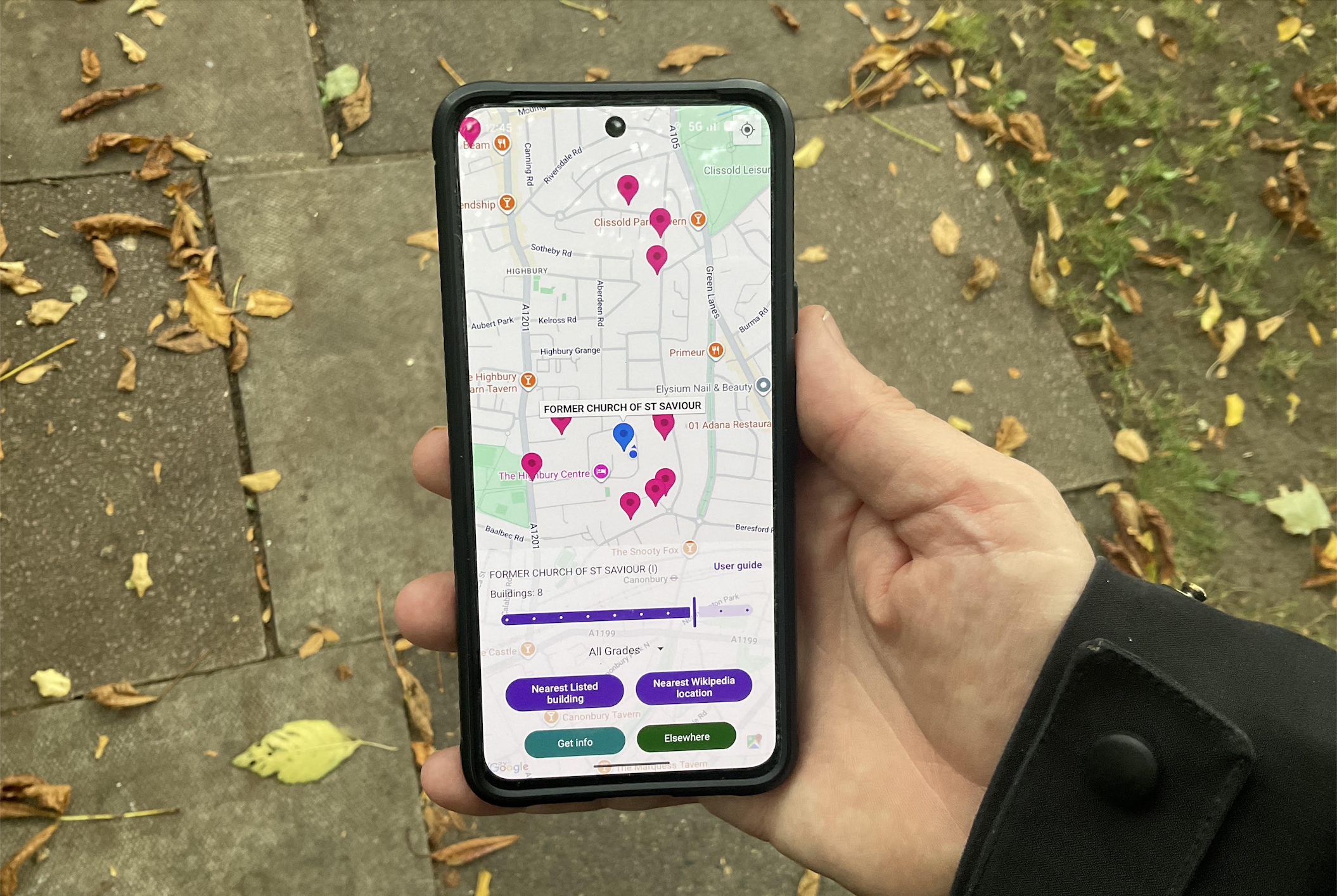
To address this, I created an Android mobile app using the publicly available information on listed historic buildings. The idea being to link the phone’s location to the information on the buildings to see where and what they are. There are, at least for Apple, other apps out there, but to my knowledge this is the only one covering England, Scotland, Wales, Northern Ireland (The nations of the UK have separate listing systems) and the Republic of Ireland. Some details on how the app works are here.[1]
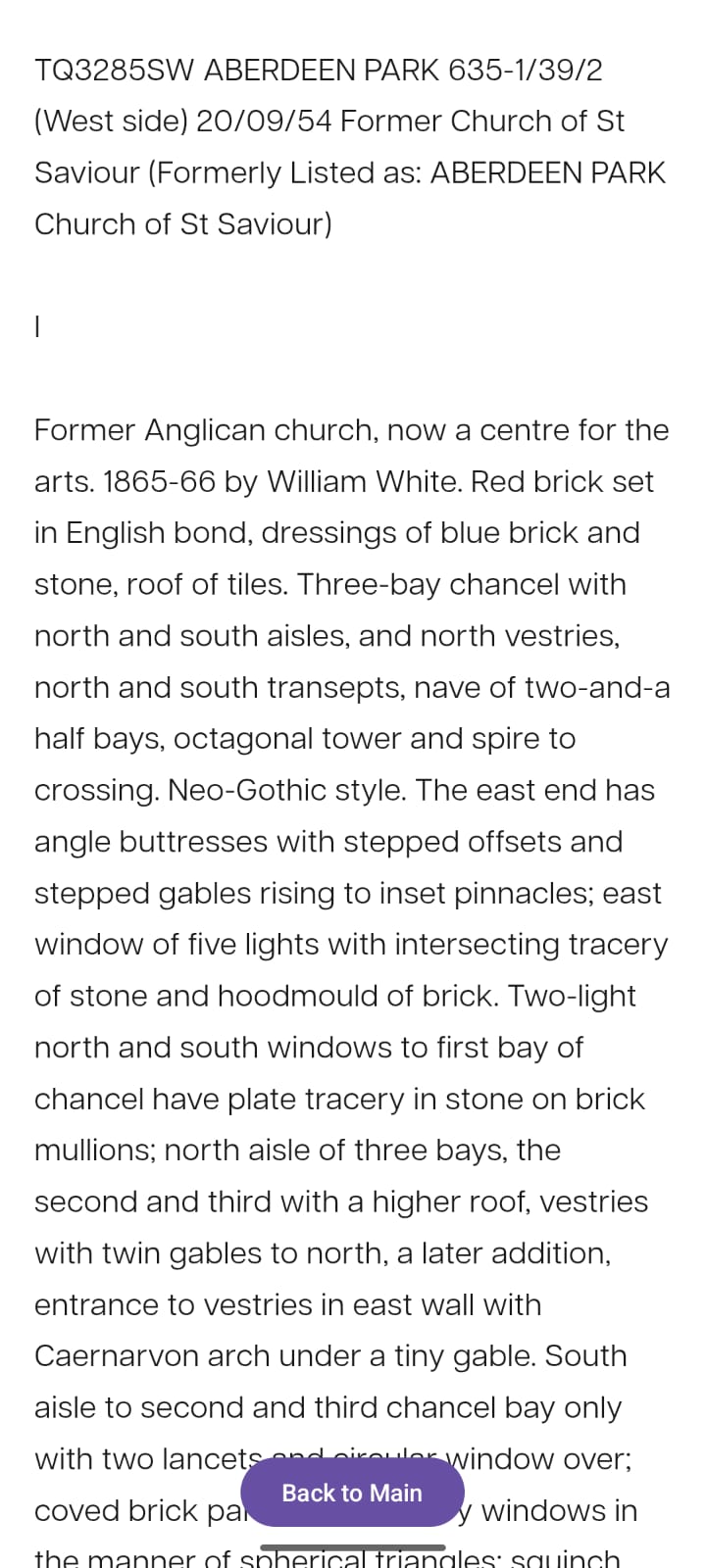
Trying to write about 1000s of buildings is though simultaneously overwhelming and a bit abstract. I’ll therefore follow the original trail the app led me on around some of my local buildings. A trail going back over 400 years from suffragette arsonist activism, through the Victorian expansion of London, to before The Great Fire of London and ending in the (first) Elizabethan era - passing some floating coffins on the way. Showing what came back and what I learnt from the official Historic England list descriptions shown in the app screenshots below.
The burning post box (1913): Pillar box by Highbury Grove - Grade II
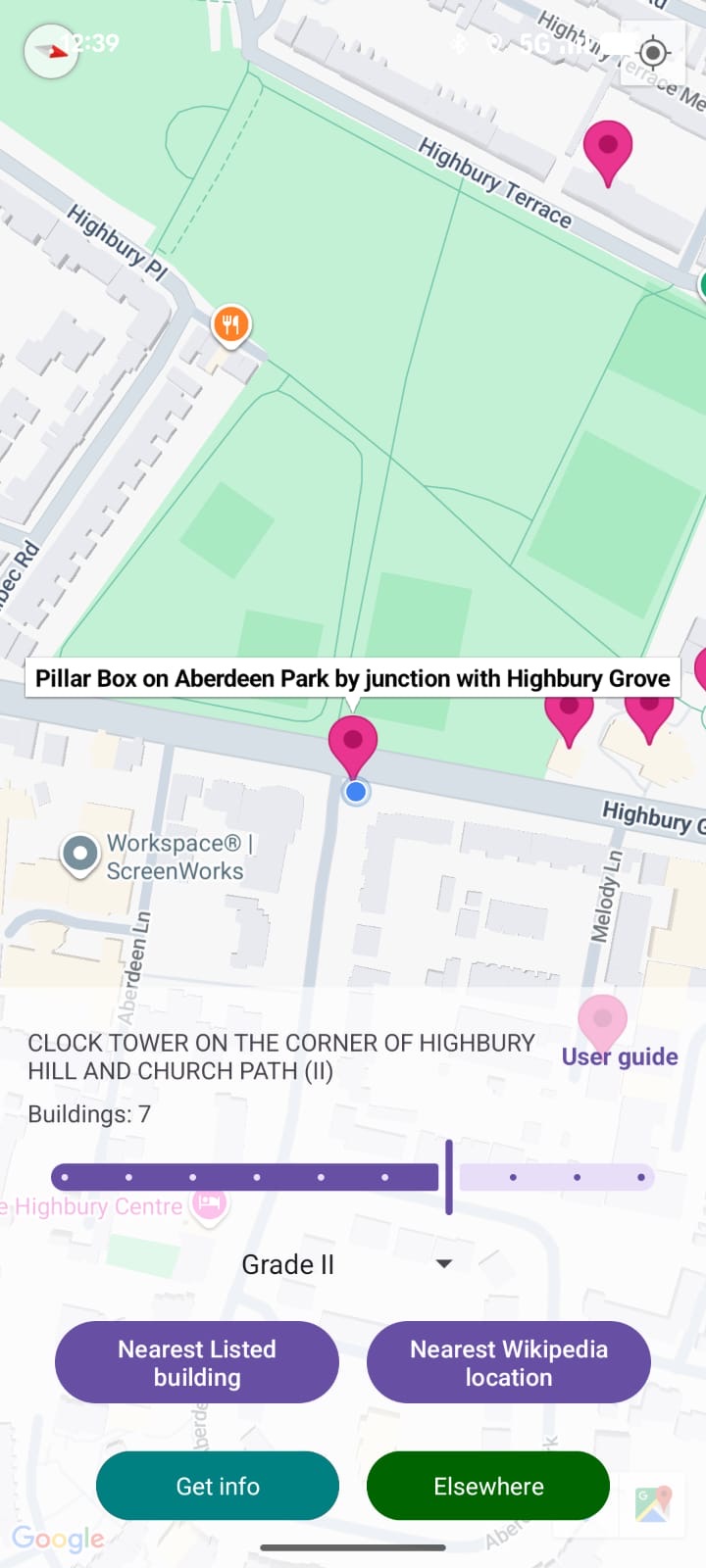
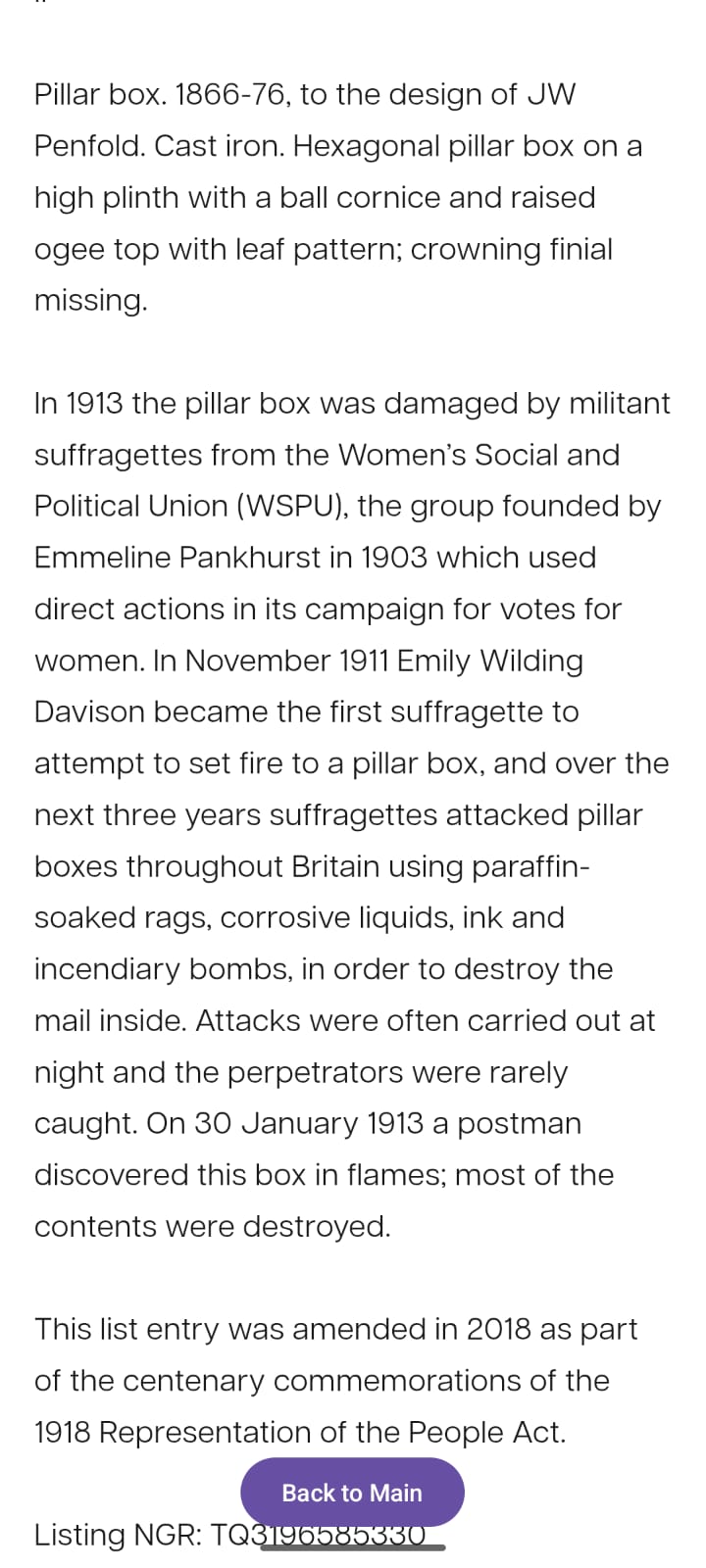
When I first tested the app, to my surprise, I found that my nearest listed building was not a building but a post box from the 1860s/70s. A time when very few Londoners had a vote and the city had no electric lighting. There are three examples of this older type of post box in the area. From the list description of the box on the corner of Highbury Grove I learn that it was found on fire by a postman on the 30th January 1913.
From November 1911 suffragettes had been attacking post boxes usually at night and the attacks continued for another three years. They ceased due to the suffragette movement’s decision to support the World War I war effort.[2] In 1918 the
franchise was extended to women although, depressingly, full voting equality was to wait till 1928. 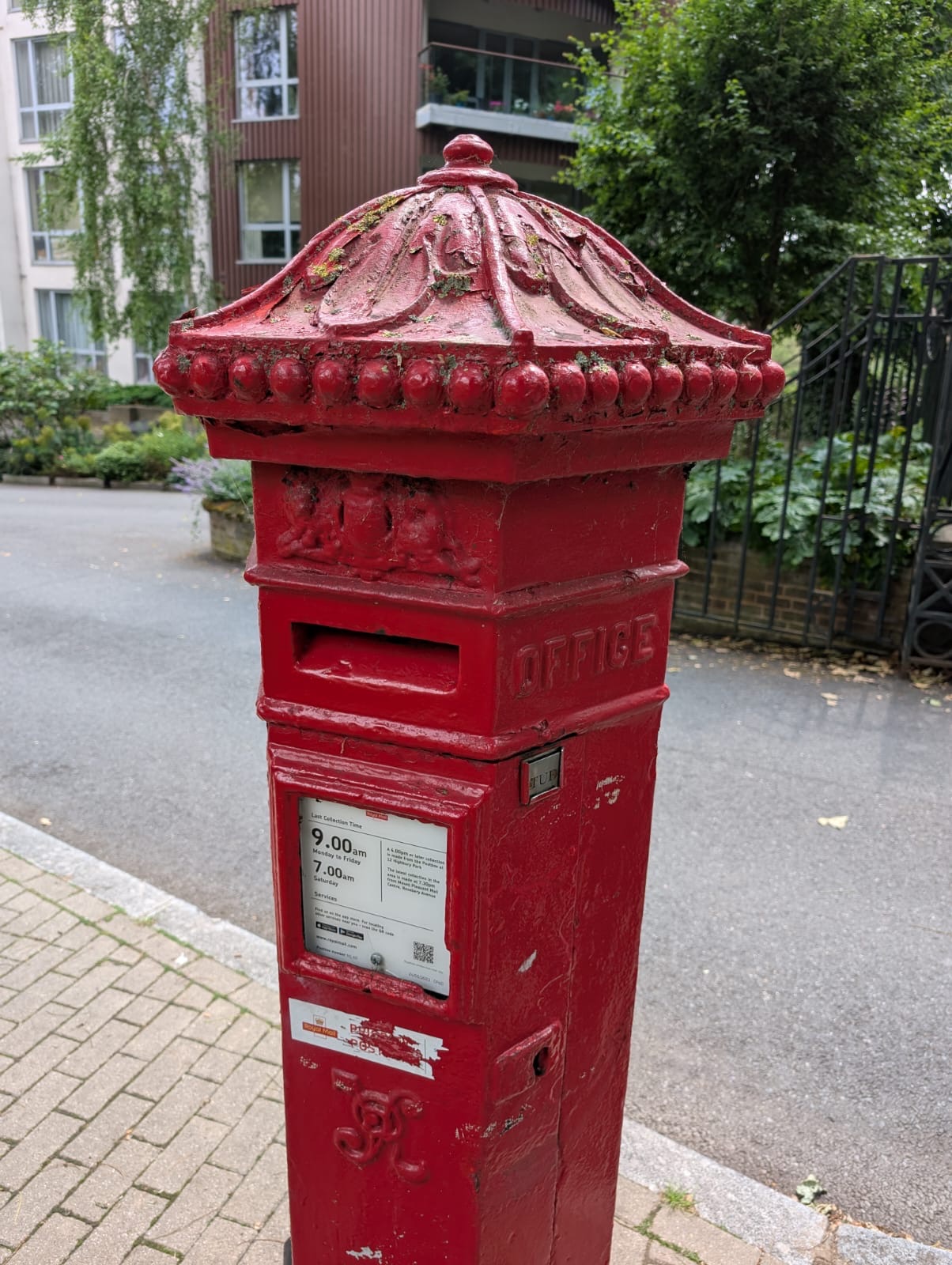
The Number 1 (1860s): Former Church of St Saviour - Grade I
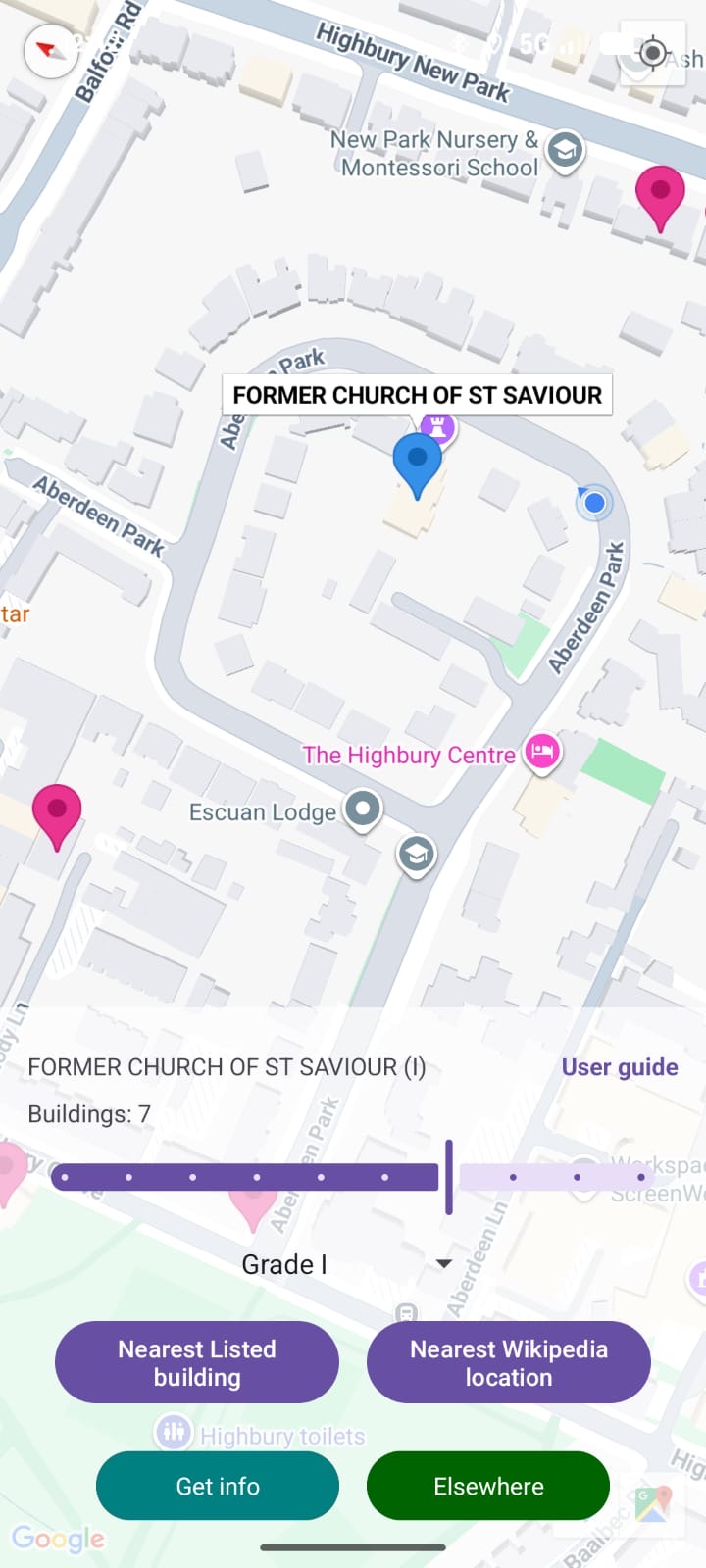
Down the road from the burning box is my nearest Grade I listed building: The former Church of St
Saviour. Grade I is the highest of the three grades of listed building in England
and only about 2.5% of English listed buildings have this rating. The other grades being II* (5.8% of buildings) and the much more common grade II (91.7%). Built around the same time as the post
box (1865-66) in a neo-gothic style. It illustrates another aspect of listed buildings in that the use has changed and St Saviour’s is no longer a church, has spent a period as artists’
studios and is currently up for sale. 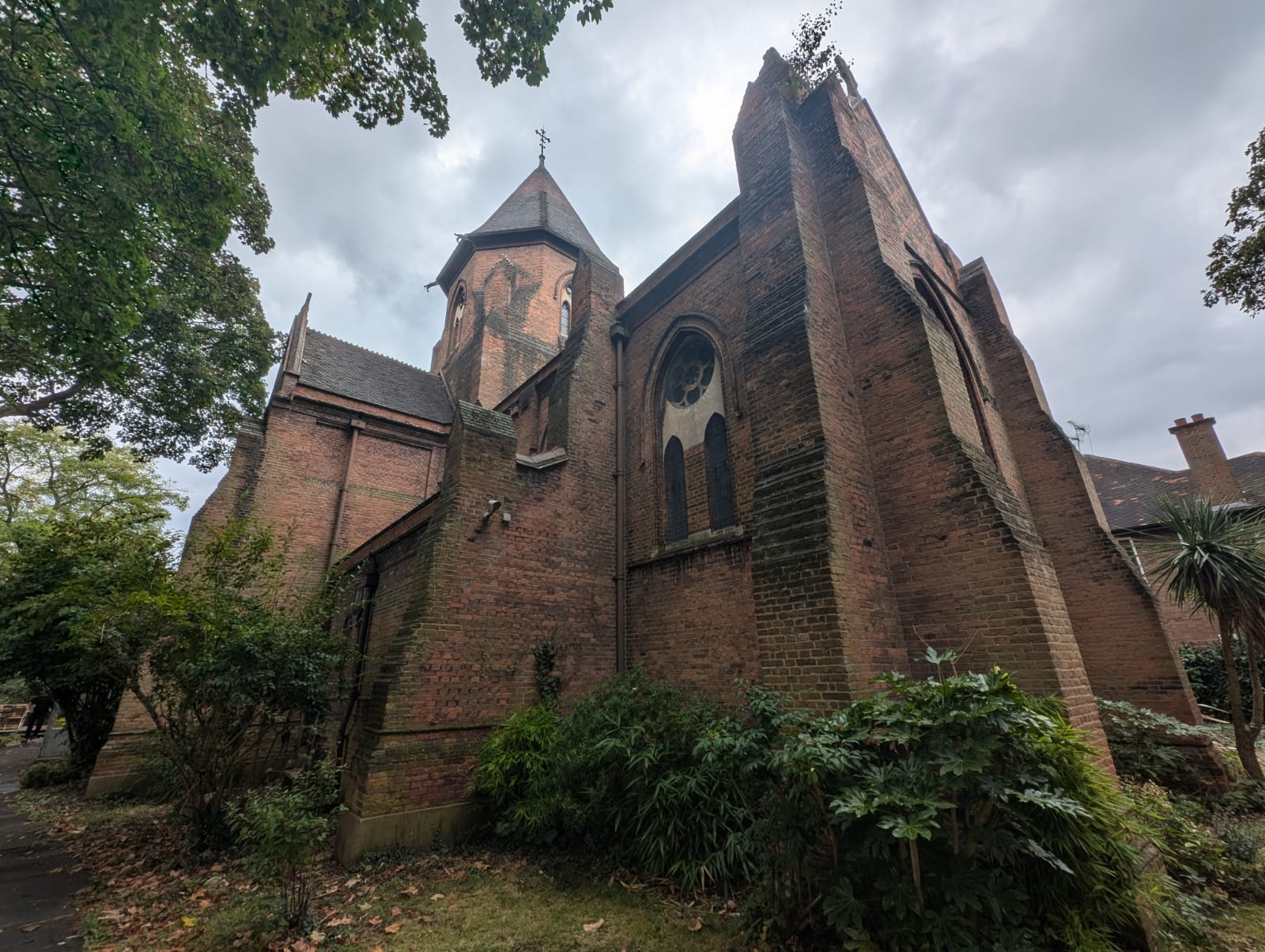
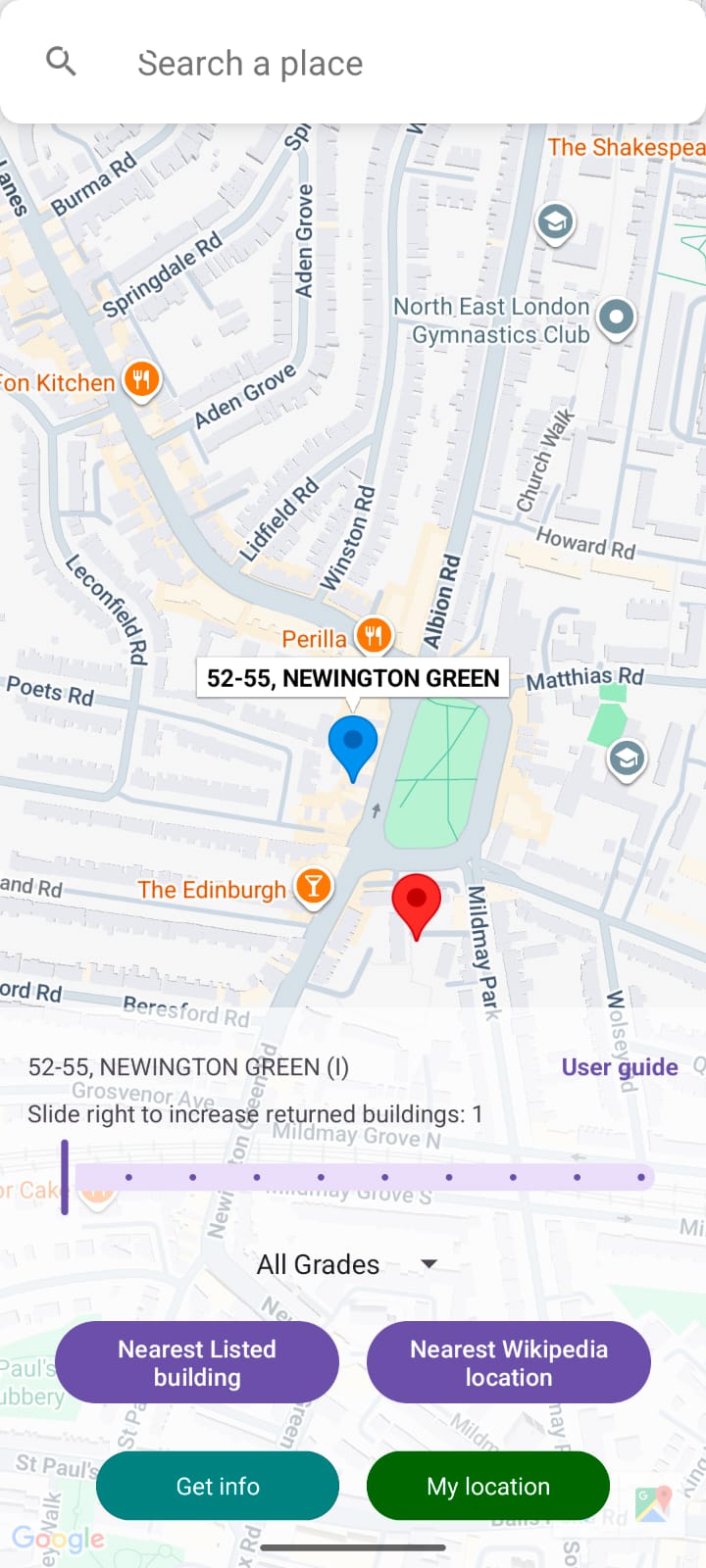
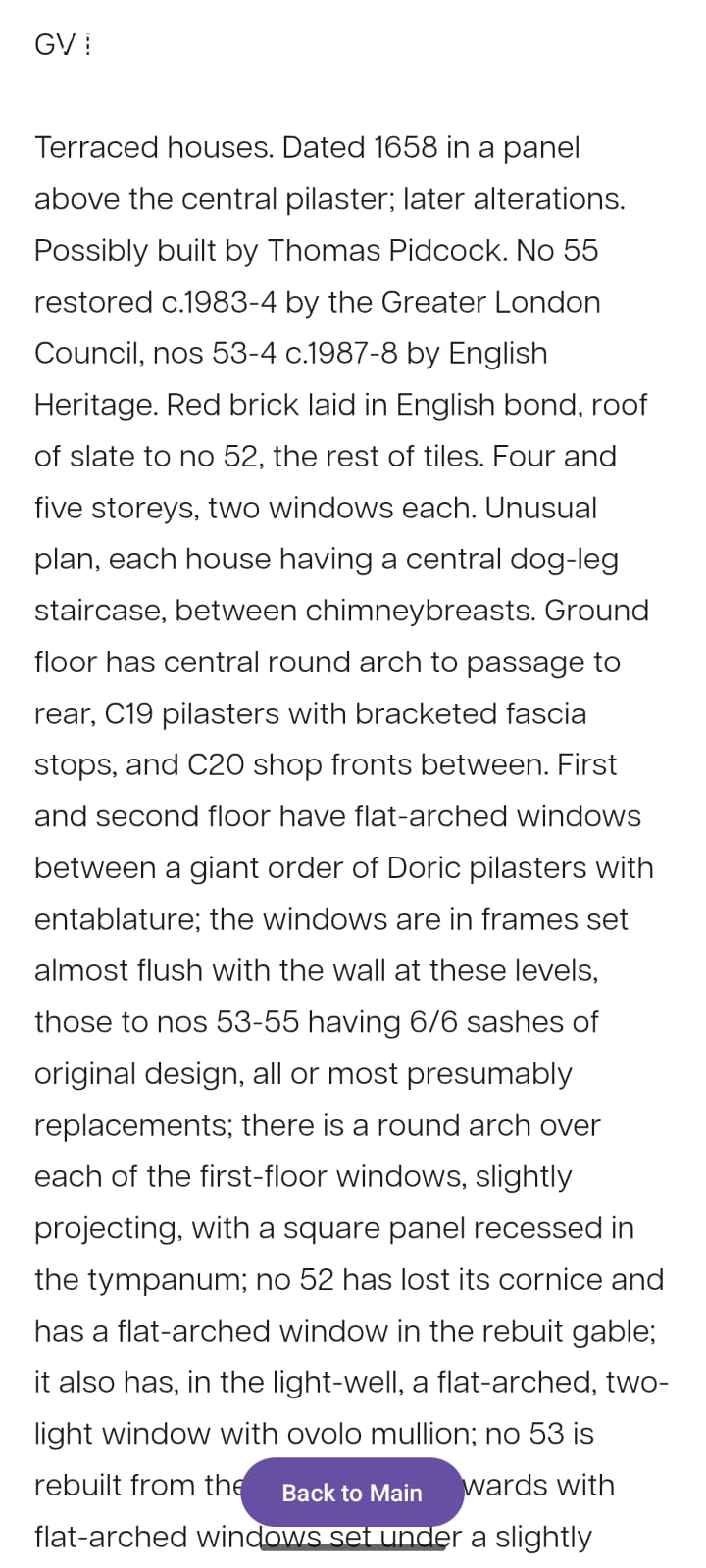
The pre-Fire building (1658): 52-55 Newington Green - Grade I
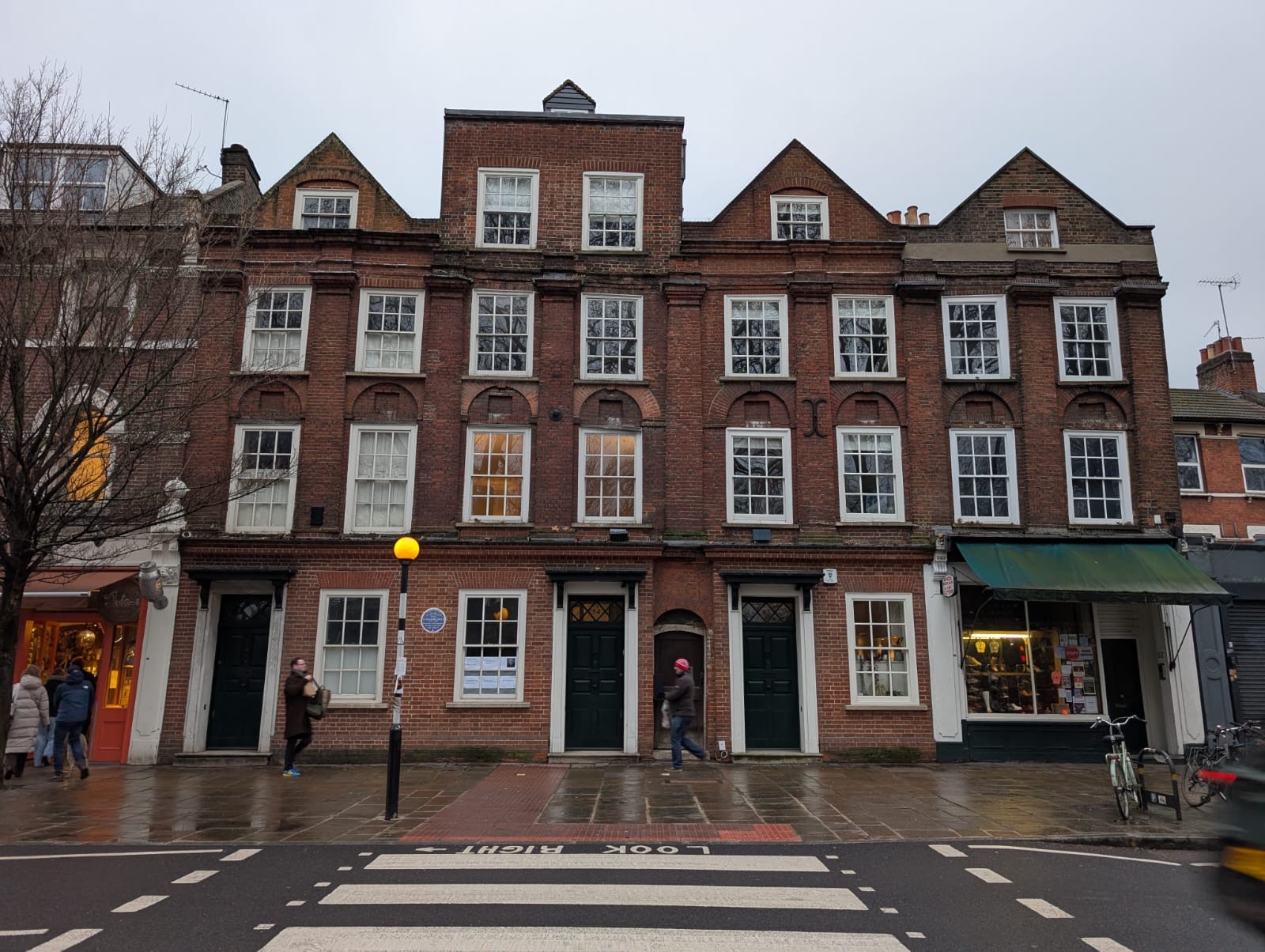
A few streets over from the retired St Saviour’s is a building I have walked past many times incorrectly assuming that, like much of the area, it was built in the 19th century when it originates
from 200 years earlier. 52-55 Newington Green is another Grade I, one of London’s oldest
residential buildings dating from 1658 a few years before The Great Fire of London in 1666.[3] Admittedly, as Newington Green was part of a
village outside London at the time, it would have been some distance
from the flames!
The Two Marys: The old (1563) and new church (1858) of St Mary - Grade II*
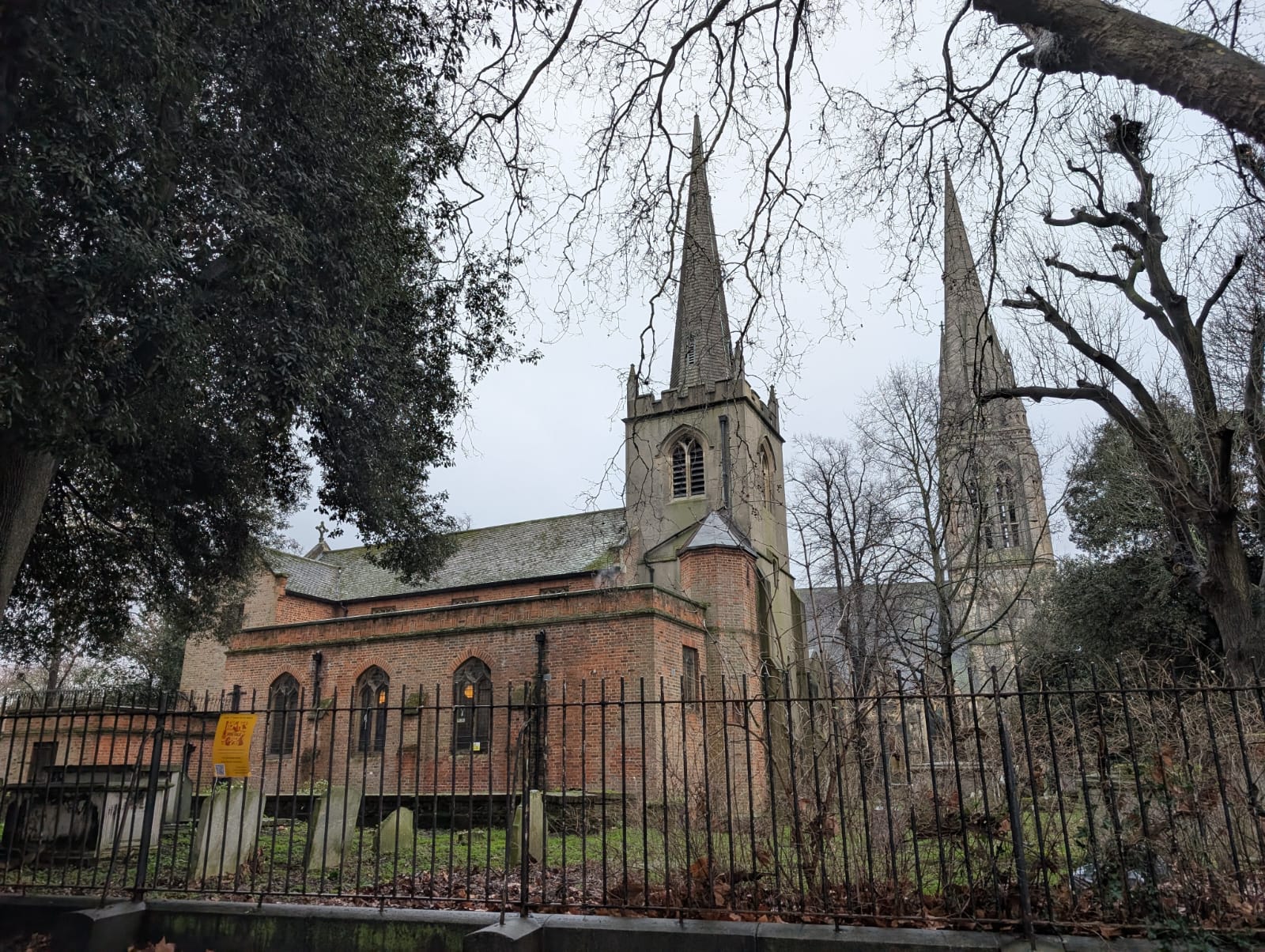
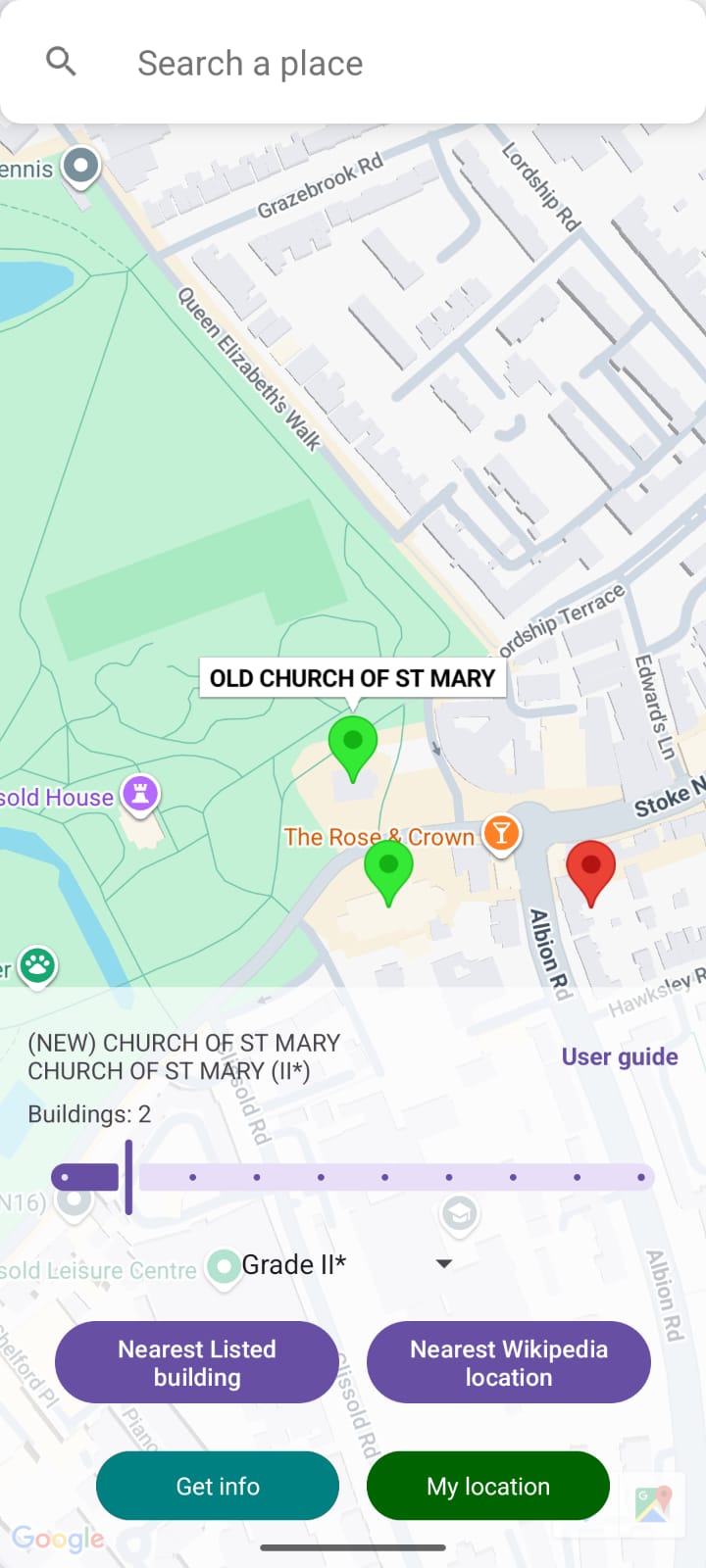
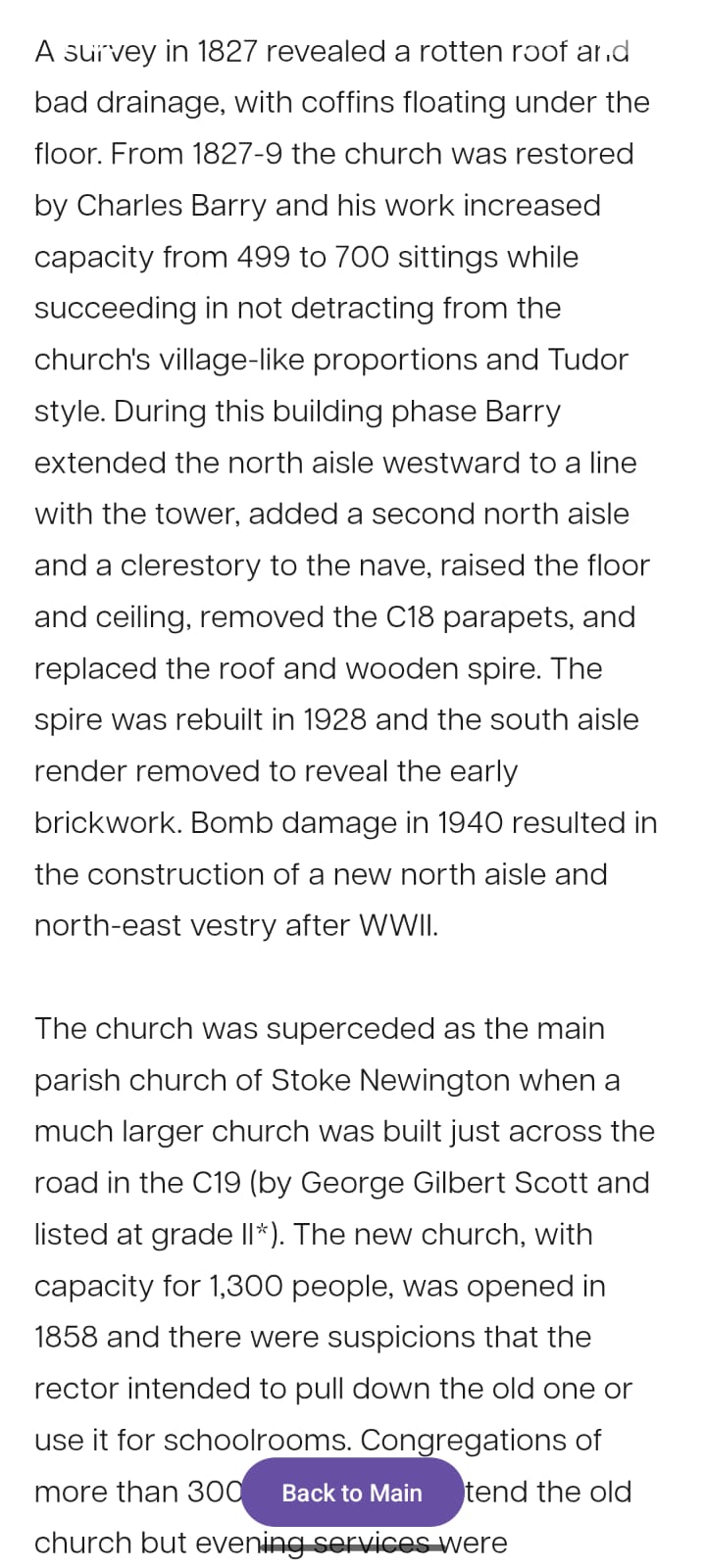
Walking north from Newington Green on Albion Road brings me to two Grade II* listed buildings with the same name. In one case travelling back another century to 1563 and the reign of Elizabeth I when the old parish church of St Mary’s was built (The church in the foreground of the photograph). The list description reveals that the church was restored by Charles Barry in 1827-28 who went on to become one of the architects of the Houses of Parliament. The building was clearly in a bad state at the time as apparently floating coffins were visible under the floor.
When the new St Mary’s was opened over the road in 1858 (by George Gillbert Scott later to build part of St Pancras station) there was a suspicion that the old church might be pulled down, but it continues to this
day as an arts centre. So I end the tour with the new build and restoration work by architects of two of the UK’s most famous Victorian
buildings facing off across Church street.
Back to the Future
Parochial means ‘of the parish’ for a reason. I don’t necessarily expect the buildings highlighted to have the same resonance to readers outside the area. However, in microcosm, they illustrate why we designate certain buildings (or structures) for protection and how knowing more about them can change our perceptions.
We may appreciate the visual amenity of listed buildings to areas, but in contrast to national collections in museums, they are a public collection that we all, at least externally, have access to without necessarily being aware of their existence. They are also a collection that, while not uniformly distributed, are typically spread out around a country. This excursion around a very small part of this collection shows how we can use technology to learn more about them.
As can be seen from some of the screenshots, parts of the buildings’ list descriptions are not accessible to a non-architect. I certainly don’t know what ovolo mullion, dog-leg staircases and quite a few of the terms referred to mean. The descriptions were written to technically document buildings for listing so this is understandable. They would also often have been written at a time when it would not have been easily possible to make the list information public.
This shows the opportunity in providing a summary for the general public as well as the technical description. Changes are being made in this. For example, the post box was designated for its design. The historic context on its incineration was added in 2018 to commemorate the 100th anniversary of women first getting the vote.
A future stage in the app project is to use AI techniques to allow the app to show the information of most interest to general users and enable them to ask questions. If you have an Android phone and would be interested in testing the current version of the app, discussing and/or adding in public data on another country’s historic buildings get in touch. No time like the present.
Acknowledgements
Thanks go to Ian Baxter, Tom Bolton, Roger Bowdler, Ben Cowell, Ursula Davies, Adala Leeson, Deborah Mays, Duncan McCallum, Paul Oxley and Simon Wilson for their comments on
the project. All views expressed and any errors are my own.
This project has also been very influenced by Amir Dotan and his work on Stoke Newington history which has changed my conception of the wider area and what one can do with local history.
References
Historic England’s listed buildings site
Historic England’s Heritage Counts statistics
Bridget Cherry and Niklaus Pevsner’s ‘London North’
[1] Currently the list descriptions in England, Scotland and the Republic of Ireland are accessible.
[2] For more on this aspect of the suffragette movement see this Wikipedia page:
https://en.wikipedia.org/wiki/Suffragette_bombing_and_arson_campaign#1914_attacks
[3] The basis for this is Bridget Cherry and Niklaus Pevsner’s ‘London North’ which describes the building as London’s oldest brick terrace.